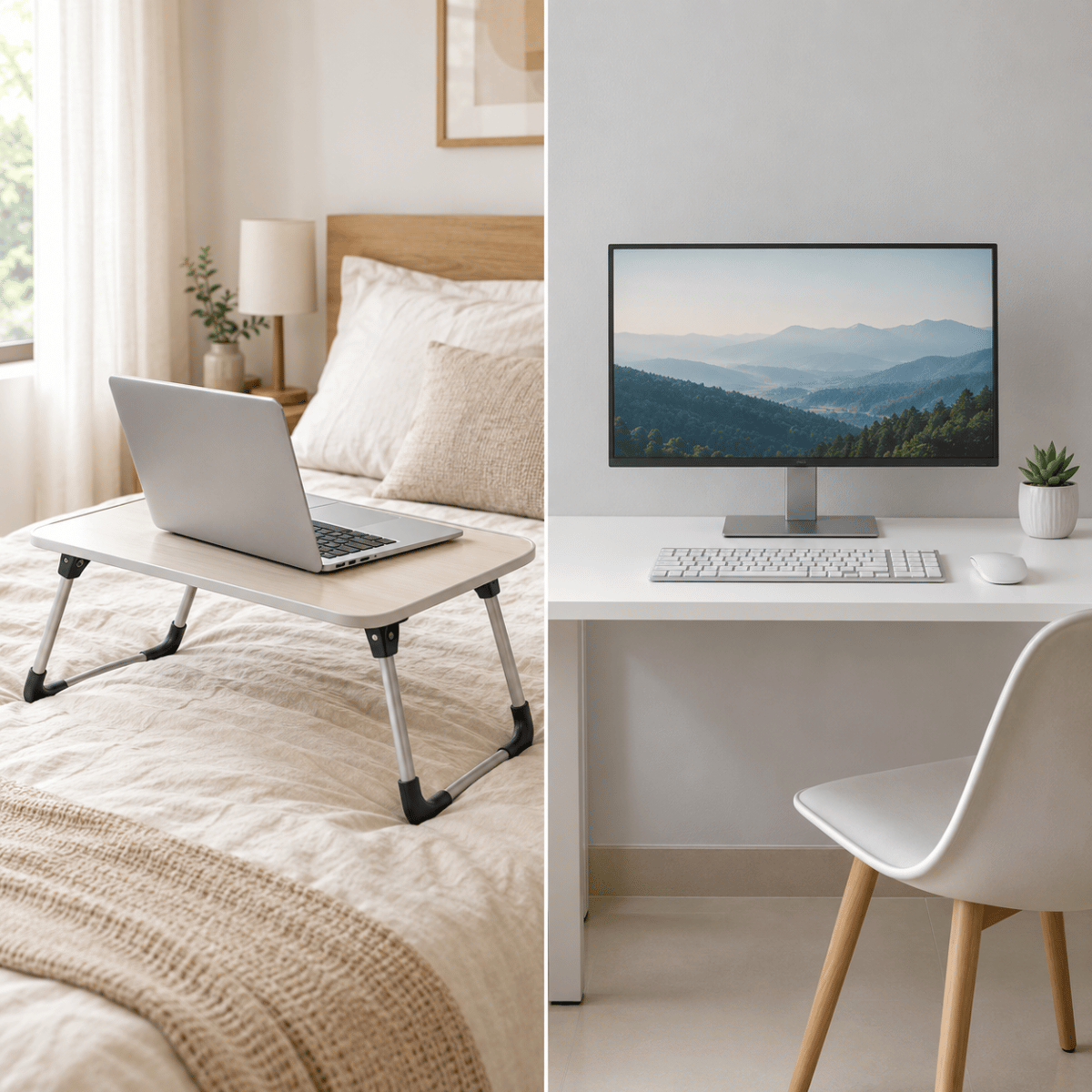

Most people buying a laptop table don’t actually want a laptop table. They want something to sit in bed or on the sofa without hunching over. A study table solves a different problem: a fixed workspace with room to spread out. If you’re furnishing a home office or a bedroom corner, these are not interchangeable – and buying the wrong one is a genuinely common mistake.
What Is a Laptop Table?
A laptop table (also called a lapdesk, portable laptop desk, or laptop stand) is a lightweight, typically foldable surface designed for laptop use in flexible positions – on a bed, sofa, or floor. The defining feature is adjustable height and angle on folding legs, letting you position the surface at whatever height the situation needs. Most are 60-80cm wide and 30-45cm deep – compact enough to carry between rooms.
Some have a built-in mouse tray that folds out to the side. Some have cooling vents cut into the surface. Neither feature is a reliable differentiator from one brand to another, so focus on surface dimensions and max height range before anything else.
What Is a Study Table?
A study table is a fixed-height desk – standard desk height is 72-76cm, which is the right clearance for a chair and proper seated posture. Widths run 90-150cm, depth 45-60cm. You sit at it, not on it. It’s designed for sustained desk work: writing, a dual-monitor setup, peripherals, reference material spread out in front of you. For a full guide on sizing and setup, choosing the right study table covers the dimensions in detail.
The main constraint is location: once placed, it stays. That’s not a flaw – it’s what makes it work for focused, extended sessions. The commitment to a spot is what gives you the ergonomic consistency a portable table can’t.
Laptop Table vs Study Table: The Core Differences
| Feature | Laptop Table | Study Table |
|---|---|---|
| Height | Adjustable (typically 20-70cm) | Fixed (72-76cm standard) |
| Width | 60-80cm | 90-150cm |
| Depth | 30-45cm | 45-60cm |
| Portability | Yes – folds, lightweight | No – fixed to a spot |
| Chair required | No – bed and sofa use | Yes |
| Best for | Flexible/casual WFH, travel, bedroom | Dedicated home office, long daily sessions |
| Ergonomic rating | Lower (posture compromised) | Higher (proper desk height + chair) |
| Price range | Rs 1,000-5,000 | Rs 8,000-35,000+ |
Dimensions You Need to Know Before Buying
For a laptop table, the working surface is usually 60cm wide (fits a 15.6-inch laptop) to 80cm wide (fits a laptop plus a small notebook beside it). Height adjusts from about 20cm flat on a bed to 70cm at a standing or bar-stool height. If you plan to store it, check the folded thickness – some collapse to 15-20cm, others don’t fold neatly enough for a shelf.
For a study table, 90cm width is the minimum for a laptop plus a separate keyboard. At 120cm you can run a laptop and an external monitor side by side comfortably, which matters if you do any design, spreadsheet, or dual-reference work. Depth is where most buyers underestimate: 60cm lets you position a monitor at arm’s length (50-70cm from your eyes is the standard range); 45cm depth pushes the monitor closer than that, which creates eye strain over long sessions.
Which One Actually Works for Work From Home?
The honest answer depends on how much you’re working from home and what you’re doing.
If you WFH a few days a week with no fixed schedule, a laptop table is fine. You’re not seated for 8-hour stretches; posture matters less in shorter sessions. The portability is a real advantage – you move between the bedroom, the living room, and wherever the call is happening. A Rs 2,000-3,000 laptop table handles this without a dedicated study table setup.
If WFH is your primary setup and you’re sitting for 5+ hours a day, a study table is the right call. The structural problem with laptop tables for full-time use: the surface is usually below optimal height, which angles your neck down, rolls your shoulders forward, and bends your wrists upward over a keyboard. Weeks of this is uncomfortable. Months of it is a recurring neck and upper-back issue. A proper desk with a chair adjusted to desk height keeps your eyes level with the top of the screen and your wrists neutral. A laptop table can’t do this by design – the geometry doesn’t allow it.
There’s a middle path worth knowing: laptop table as keyboard surface + external monitor on a separate stand or shelf. The laptop table holds the keyboard at a comfortable angle; the monitor sits higher. This is meaningfully better than a laptop table alone, but it’s also a workaround that a proper desk avoids entirely.
Using Both – When It Makes Sense
For many people, this is the right answer. A study table as the primary workspace, a laptop table for everything else – reading in bed, video calls from the living room, work while travelling. They’re not competing products. They solve different problems in different parts of the day, and at a combined cost of Rs 12,000-15,000 you have both without compromise.
How to Choose Between Them
Three questions cut through the decision. First: how many hours a day will you use it? Under 2 hours – a laptop table handles it. Over 4 hours daily – invest in a study table with a proper chair. Second: do you have a dedicated space? A spare room corner, a specific wall in the bedroom – if yes, a study table makes more sense. If you move around the house or travel often, portability wins. Third: what’s the primary task? Typing-heavy work (coding, writing, spreadsheets) needs proper desk height for wrist alignment. Video calls and reading are more forgiving of a lower surface.
Frequently Asked Questions
What is a laptop table called?
A laptop table goes by several names: lapdesk, laptop desk, portable laptop stand, or foldable laptop table. All refer to the same product – a small, adjustable, portable surface for laptop use away from a fixed desk.
Can I use a laptop table for long work hours?
Not comfortably for extended daily use. The surface sits below the ergonomic ideal for desk height, which pushes your neck down and your shoulders forward over time. For sessions under 2 hours it’s fine. For full-time WFH, the posture cost compounds – it’s a recurring neck and upper-back issue that a proper desk prevents.
What size laptop table should I buy?
60cm wide is enough for a laptop alone. Go 70-80cm wide if you want space for a mouse or a small notebook beside it. On height range: look for a max height of at least 65-70cm if you plan to use it seated on a chair; 40-50cm max is fine for bed and sofa use only.
Is a laptop table good for your back?
For occasional use – yes, acceptable. For daily use over multiple hours – no. The surface height forces a forward head posture that the spine isn’t designed to hold for long periods. If back health is a concern, a proper study table with a chair adjusted to elbow height is the right investment. A laptop table is a convenience product, not an ergonomic one.
What is the difference between a laptop table and a lap desk?
Functionally the same – both terms are used interchangeably for the same portable, foldable product. Some people use “lap desk” specifically for flat boards without legs (rested directly on the lap), while “laptop table” more often refers to the version with folding legs. In practice, the terms overlap and most listings use both.
What height should a laptop table be set at?
For bed or sofa use: 30-45cm works for most people in a reclined or cross-legged position. For seated use on a standard chair: 65-70cm gets you closer to desk height, though most laptop tables max out below this – check the spec before buying if chair use is your primary plan.
Which is better for WFH: a laptop table or a study table?
Depends on the scale of your WFH. Occasional (1-3 days a week, flexible hours) – laptop table is adequate. Full-time (5 days a week, 5+ hours daily) – a study table with a proper chair is the better investment. The ergonomic difference becomes significant over months of daily use.
Can a laptop table replace a study table?
Not really. A laptop table lacks the width for peripherals, the fixed height for proper desk posture, and the stability for sustained typing-heavy work. It’s a portable supplement, not a substitute. If you’re choosing between one or the other and you work from home regularly, a study table serves you better.