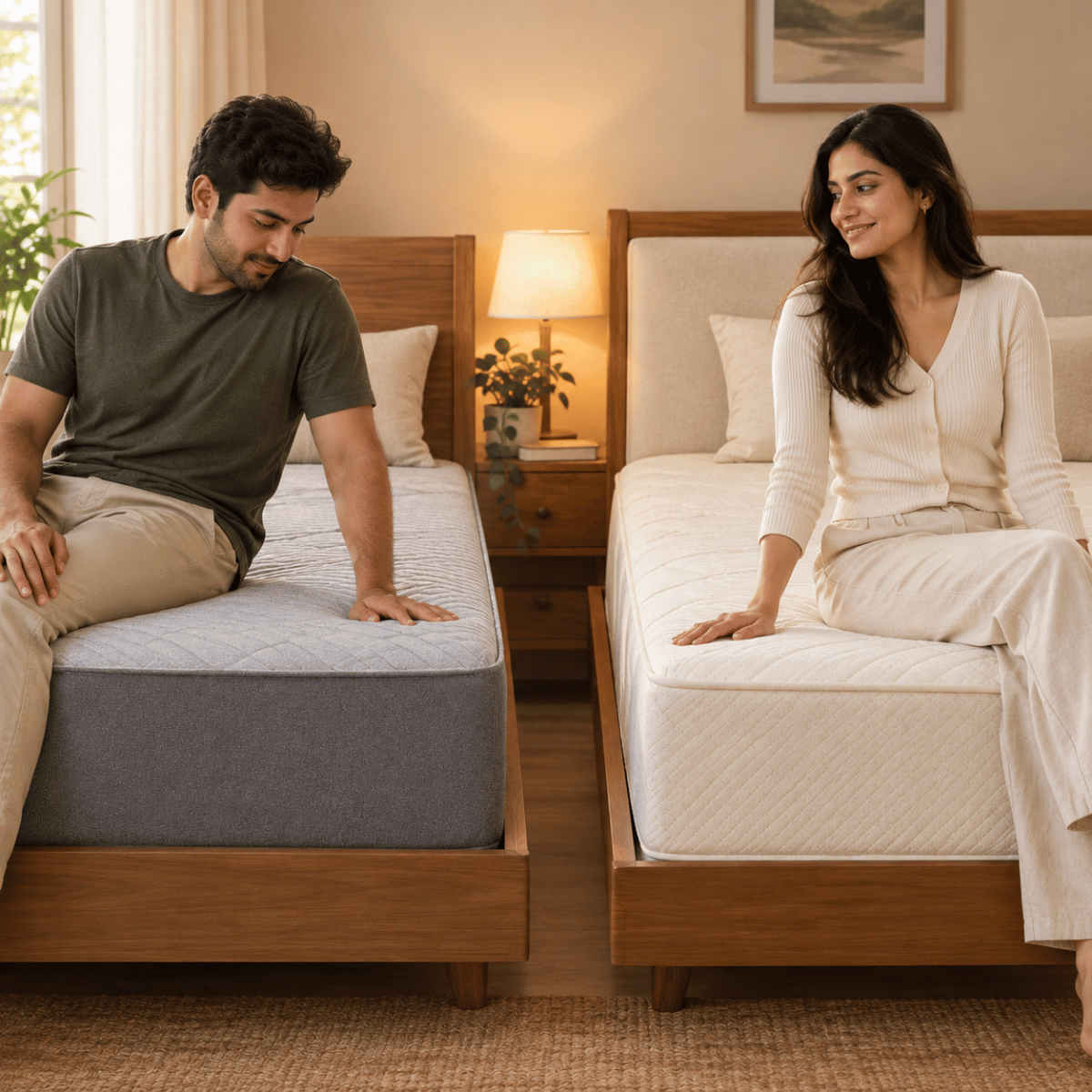

Both latex and memory foam mattresses are frequently recommended as alternatives to spring mattresses – and for many of the same reasons: better pressure relief, longer lifespan, less motion transfer. But they achieve these outcomes through completely different mechanisms, and those mechanisms make one a better fit than the other depending on how you sleep, how hot you sleep, and what you prioritise in a mattress. Choosing between the two can feel overlapping on paper. In practice, most people who sleep on both have a clear preference within a few nights. This guide breaks down what each material is, how it actually feels to sleep on, and which one makes more sense for your situation.
What is a latex mattress?
Latex is a material derived from the sap of the rubber tree (Hevea brasiliensis). When processed into mattress form, it creates a foam with a distinctive feel: bouncy, responsive, and firm in a way that pushes back against the body rather than conforming around it. There are three main types used in mattresses.
- Natural latex: made from 100% rubber tree sap using either the Dunlop or Talalay process. The most durable and breathable latex option – also the most expensive. Natural latex mattresses are what most people mean when they talk about latex as a premium choice.
- Synthetic latex (SBR): made from petroleum-based compounds that mimic the feel of natural latex. Lower cost, but does not have the same durability, breathability, or eco-credentials as natural latex.
- Blended latex: a mix of natural and synthetic rubber. The most common in Indian mattresses – balances cost and performance better than fully synthetic latex.
Key characteristics of latex mattresses: springs back quickly when pressure is removed (unlike memory foam, which rebounds slowly); open-cell structure allows air to circulate, keeping the surface cooler; natural latex lasts 15-20 years – longer than most foam alternatives; significantly heavier than memory foam, making rotating or moving the mattress harder.
Latex suits: combination sleepers who change positions through the night, hot sleepers, those who prefer a responsive and bouncy feel over the “sinking in” sensation of memory foam, and buyers investing in long-term durability.
What is a memory foam mattress?
Memory foam (viscoelastic foam) was originally developed by NASA and became a consumer mattress material in the 1990s. It is temperature-sensitive: the foam softens where the body applies heat and pressure, creating a slow, body-contouring sink that distributes weight evenly. As pressure is removed, the foam slowly releases and reforms – the source of the distinctive “quicksand” feel people either love or find claustrophobic.
- Traditional memory foam: the original formulation. Excellent contouring and pressure relief, but retains body heat – a real problem in Indian summers without air conditioning.
- Gel memory foam: infused with gel beads or gel layers to draw heat away from the sleeping surface. Sleeps noticeably cooler than traditional memory foam.
- Open-cell memory foam: modified internal structure allows better airflow while preserving the contouring feel. A good middle ground between heat and comfort.
Key characteristics of memory foam mattresses: wraps around the body’s shape, filling gaps under the lumbar curve and relieving pressure at the shoulder and hip; slow rebound (3-5 seconds) means it has not reformed by the time you have changed positions; excellent motion isolation – movement on one side does not transfer across the bed; lighter than latex, easier to rotate and move.
Memory foam suits: side sleepers (exceptional shoulder and hip pressure relief), couples sharing a bed where one partner is a restless sleeper, those with chronic joint pain or pressure-point sensitivity, and anyone who prefers the enveloping, body-hugging sensation over a bouncy surface.
How memory foam and latex feel differently during sleep
The feel difference between these two materials is significant enough that most people strongly prefer one over the other. Memory foam gives the sensation of being cradled – the mattress conforms around your body, distributing your weight across the surface. When you change positions, there is a brief moment where the foam has not yet caught up with your new position. Hot sleepers often find traditional memory foam uncomfortable in Indian summers, though gel-infused variants reduce this considerably.
How latex supports your body differently
Latex gives a “resting on top” sensation rather than “sinking in.” The mattress pushes back against your body with a springy, immediate response. This means less heat build-up (the mattress is not wrapping around your body to retain warmth), faster position changes (no waiting for the foam to rebound), and a more energetic feel that many people find better for getting in and out of bed. The tradeoff: a natural latex mattress does not isolate pressure points as precisely as memory foam. A side sleeper on a latex mattress may experience more shoulder pressure than on memory foam at the same firmness level, because the foam is not contouring as closely around the shoulder.
Similarities between memory foam and latex mattresses
Despite the different feel, both materials share the properties that make them popular alternatives to spring mattresses.
- Back support: both distribute body weight in a way that supports the spine more evenly than most spring systems. Medium-firm variants of both are commonly recommended for lower back pain.
- Pressure relief: both reduce pressure at bony contact points – shoulder, hip, knee. Memory foam does this more precisely through close contouring; latex does it more broadly through even load distribution.
- Suitable for side sleepers: both allow the shoulder and hip to sink in enough to keep the spine in a neutral line. Memory foam has a small edge here for lighter sleepers; latex is better for heavier side sleepers who might sink too deeply into memory foam.
- Motion isolation: both dampen movement better than Bonnell spring mattresses. Memory foam is significantly better than latex for motion isolation, but both are a meaningful improvement over a spring system.
- Durability: both outlast most standard spring mattresses. Quality natural latex lasts 15-20 years; quality memory foam 10-12 years.
Differences between memory foam and latex mattresses
| Feature | Memory foam | Natural latex mattress |
|---|---|---|
| Material source | Petroleum-based synthetic polymer | Rubber tree sap (natural) or synthetic |
| Comfort feel | Contouring, hugging, body-moulding | Bouncy, responsive, pushes back |
| Pressure relief | Superior – conforms closely to body shape | Good – broader pressure distribution |
| Breathability | Moderate (gel/open-cell variants better) | High – natural open-cell structure |
| Temperature regulation | Retains heat (traditional); improved in gel variants | Sleeps cooler than memory foam |
| Motion isolation | Excellent | Moderate |
| Rebound speed | Slow (3-5 seconds) | Fast (under 1 second) |
| Weight | Light to moderate | Heavy |
| Durability | 10-12 years (quality foam) | 15-20 years (natural latex) |
| Price range | More affordable | More expensive |
Factors to consider when buying the mattress
- Sleep position: side sleepers generally do best on memory foam – the close contouring relieves shoulder and hip pressure better than latex. Back sleepers do well on either, but medium-firm latex is particularly good for lumbar support without excessive heat. Stomach sleepers should look at firm latex, which prevents the hips from sinking and reversing the lumbar curve.
- Body temperature during sleep: if you regularly wake up hot or sleep in a room without air conditioning through the Indian summer, latex’s breathability is a significant advantage. Gel memory foam is a reasonable compromise if you prefer the contouring feel but run hot.
- Partner disturbance: if you share a bed and are disturbed by your partner’s movement, memory foam’s superior motion isolation is worth prioritising over the other differences. Latex is better than spring but noticeably worse than memory foam for motion isolation.
- Budget: quality memory foam mattresses are available at lower price points than comparable latex mattresses. Natural latex carries a premium that reflects its durability and material source. For budget-conscious buyers, quality memory foam typically offers better value than low-grade synthetic latex.
- Body weight: lighter sleepers (under 60 kg) often find latex too firm and do not sink in enough for the pressure relief to activate. Heavier sleepers (over 85 kg) may sink too deeply into memory foam, losing the support benefit – latex tends to hold up better under higher body weight.
- Home trial period: because the feel of these two materials is so different, choose a mattress that comes with a genuine home trial – at least 30 nights, ideally 100 – so you can determine which feel actually works for your body over time, not just in a 5-minute showroom test.
Conclusion
Memory foam is the better choice if you sleep on your side, share a bed, or prioritise close pressure relief at the shoulder and hip. Latex is the better choice if you sleep hot, prefer a responsive and bouncy feel, or want a material that lasts longer. Neither is universally better – the right choice depends on how you sleep and what you value in a mattress.
Wakefit’s Orthopedic Memory Foam Mattress and latex mattress options both come with a 100-night free trial – sleep on it at home for up to 100 nights, and return it for a full refund if it is not the right feel for you. For a broader look at how different mattress types compare in durability over time, the guide on which mattress type lasts the longest covers all materials side by side. If you are a side sleeper making this decision, the guide on the best mattress for side sleepers goes deeper on what works specifically for that position.
Frequently Asked Questions
What’s better, latex or memory foam?
Neither is universally better. Memory foam is better for side sleepers, couples who share a bed, and those with joint pain who need close pressure relief. Latex is better for hot sleepers, combination sleepers, and those who prefer a responsive feel over the body-hugging sensation of memory foam. The right choice depends on your sleep position, body temperature, and feel preference.
Which foam is better than memory foam?
For durability, natural latex foam outperforms memory foam – it lasts 15-20 years compared to 10-12 years for quality memory foam. For breathability, latex is also superior. For pressure relief and motion isolation, however, memory foam typically wins. “Better” depends on what you are optimising for. High-density memory foam (80-100 kg/m³ density) is a significant upgrade over standard memory foam if you want to stay within that material category.
Is latex healthy to sleep on?
Yes – natural latex is one of the more health-conscious mattress materials available. It is naturally resistant to dust mites, mould, and mildew without chemical treatment, which benefits people with allergies or asthma. However, individuals with latex allergies (an uncommon but real condition) should avoid natural latex mattresses entirely and opt for memory foam or synthetic alternatives. Synthetic and blended latex mattresses may contain additives that natural latex does not, so checking the specific product’s certifications (look for OEKO-TEX or Greenguard) is worthwhile if this is a concern.
Is a 100% latex mattress good?
A 100% natural latex mattress is one of the best quality mattresses available in terms of durability, breathability, and natural material composition. It is also among the most expensive. For most buyers, a blended latex mattress (natural and synthetic combined) offers a meaningful performance improvement over a memory foam mattress at a more accessible price. A 100% latex mattress is particularly worth it if you sleep in a hot climate, have latex-related health preferences, or are buying for the long term (15+ years).
Is latex or memory foam better for lower back pain?
Both can be effective for lower back pain, and the right choice depends on your sleep position. Memory foam – specifically medium-firm memory foam – is commonly recommended for lower back pain because it fills the lumbar gap and distributes weight evenly, reducing pressure on the lumbar discs. Latex at a medium-firm level also provides good lumbar support, particularly for back sleepers, with the added benefit of better breathability. For side sleepers with lower back pain, memory foam tends to be the better choice because it relieves the lateral pressure that drives lower back strain in that position.