

Most people spend more time choosing a phone than a mattress. That’s backwards. You use your phone for maybe 4 hours a day. You’re on your mattress for 7 or 8. A wrong choice there doesn’t just mean a slightly uncomfortable night – it compounds. Bad sleep for months. Waking up stiff. Aching in the morning in places you didn’t ache before. The good news is that choosing right isn’t that complicated once you know what actually matters.
Why Choosing the Right Mattress Matters
How a Mattress Affects Sleep Quality
A mattress that doesn’t fit your body keeps you moving. Micro-adjustments, position changes, subtle discomfort you don’t even register consciously – but they pull you out of the deeper stages of sleep. You wake up feeling like you slept but didn’t rest. Over months, that gap between sleep and actual recovery is what starts showing up as fatigue, brain fog, and those “I don’t know why I’m so tired” days.
Comfort vs. Support: What Is the Difference?
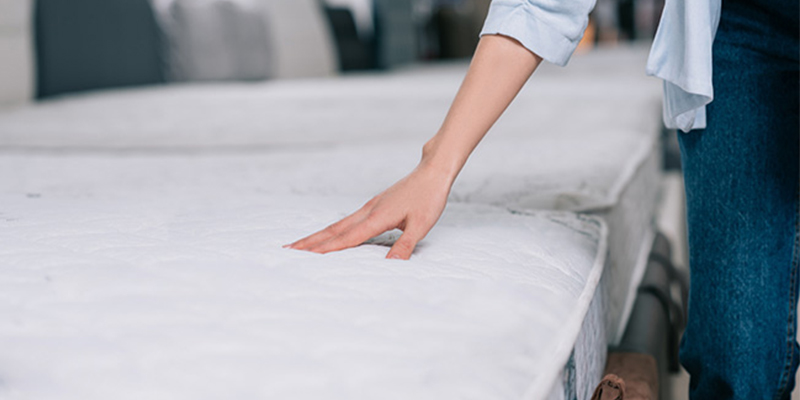
Comfort is the soft layer you feel immediately. Support is what’s holding your spine in position underneath it. Here’s where people go wrong – they lie on a mattress in a showroom for 30 seconds and buy the one that feels best. But a mattress that feels like a cloud for 30 seconds can have you in pain by 3am if there’s nothing beneath that softness to support your lower back. You need both. The right firmness is where those two things meet.
What Happens When Your Mattress Is Too Soft or Too Firm?
Too soft and your hips sink. When your hips sink, your lumbar spine bends out of its natural curve. You wake up with lower back pain that nobody can quite explain. Too firm and you’re lying on a surface that won’t give way at the shoulder or hip – if you sleep on your side, those pressure points take the full load all night. Neither extreme actually rests your body. The goal is a surface that supports without pushing back too hard.
Understand the Different Types of Mattresses
Memory Foam Mattresses
Memory foam is the most popular type in India right now for a reason – it contours to your body, distributes weight well, and absorbs motion so well that a restless partner barely registers on the other side. The one complaint: it can trap heat. If you run warm, look specifically for open-cell foam or gel-infused options. Generic “memory foam” with no ventilation can feel like sleeping under a warm blanket you can’t kick off.
Latex Mattresses
Latex behaves differently from foam – it pushes back. Instead of sinking in, you float on top. That responsiveness makes position changes effortless, and it’s naturally cooler than foam. Durability is the real selling point though. A quality latex mattress can last 12-15 years, sometimes more. The price reflects that.
Spring Mattresses
If budget is the primary constraint, a Bonnell spring mattress is the entry point. It’s the most affordable. It also transfers motion across the whole surface – when your partner moves, you feel it. And the lifespan is shorter, usually 5-7 years before the support noticeably drops. Fine for a guest room. For daily use by two people, the other options generally serve better long-term.
Hybrid Mattresses
A hybrid combines a foam or latex comfort layer with a spring base. The goal is breathability from the coils, contouring from the foam above. They tend to cost more, and the quality depends heavily on which materials are actually used – a cheap spring base with a thin foam top isn’t really a hybrid in any meaningful sense. When it’s done well, it’s a good balance for people who find pure foam too enveloping.
Choose a Mattress Based on Your Sleeping Position
Mattresses for Side Sleepers
If you wake up with a sore shoulder or hip and you sleep on your side, the mattress is probably too firm. Side sleeping concentrates weight on those two points. You need enough cushioning there to let the joint sink slightly – not so much that your whole body sinks, just enough to relieve the pressure. Medium to medium-soft firmness is usually where side sleepers land.
Mattresses for Back Sleepers
Back sleepers need the lumbar area supported – that natural inward curve of the lower back shouldn’t be bridging air. A medium-firm mattress holds that curve rather than letting it collapse. Heavier back sleepers often need firmer; lighter sleepers can go slightly softer without losing support.
Mattresses for Stomach Sleepers
Stomach sleeping is genuinely hard on the lower back. It forces the spine into an extension that hours of repetition aggravates. If this is how you sleep, go firm. A soft mattress lets the hips sink and the spine curve in a direction it really shouldn’t hold for 8 hours. Firm keeps everything level.
Mattresses for Combination Sleepers
You move between positions during the night. That means you need a mattress that lets you move – something responsive that bounces back quickly when you shift, not one you have to wrestle with every time you turn over. Latex or a medium-firm foam with some spring to it usually works. Heavy memory foam that holds your shape too long can feel like you’re fighting to change position.
How to Choose the Right Mattress Size
| Size | Dimensions (inches) | Best for |
|---|---|---|
| Single | 36″ x 75″ | Solo sleepers, kids, small rooms |
| Double | 48″ x 75″ | Solo sleepers who want more room |
| Queen | 60″ x 75″ | Couples, most master bedrooms |
| King | 72″ x 75″ | Couples wanting maximum space |
Single Mattress
36 x 75 inches. Works for one person in a smaller room, a child’s bedroom, or a guest room that doesn’t need to accommodate two. Tight for two adults.
Double Mattress
48 x 75 inches. More room for a solo sleeper, but only 24 inches each if two people share it. That’s not a lot of space per person. For couples, skip straight to queen.
Queen-Size Mattress
Queen-size (60 x 75 inches) is the default for most Indian couples. Each person gets 30 inches of space – enough for most, not quite enough for restless sleepers. Fits comfortably in a 10 x 12 foot room with room to move around the bed.
King-Size Mattress
King-size (72 x 75 inches) gives each person 36 inches – noticeably more. Genuinely useful if one of you moves around in sleep. Needs at least a 12 x 12 foot room. Below that, you’ll be squeezing past the frame to get to your wardrobe.
What Mattress Features Should You Consider?
Pressure Relief
If you wake up with numbness or aching at the shoulder, hip, or knee – that’s a pressure issue. Memory foam and latex are the materials that actually address this. They absorb and redistribute the load instead of pushing back against it. A firm spring mattress generally won’t solve a pressure problem no matter how well-marketed it is.
Spinal Alignment
Your spine has a natural curve. A good mattress keeps that curve in place whether you’re on your back, side, or stomach. When a mattress fails here, you don’t always feel it as “back pain” – sometimes it’s just a vague ache, or stiffness that takes half the morning to shake off. If that sounds familiar, spinal alignment is likely the issue.
Motion Isolation
Matters only if you share your bed – but then it matters a lot. If you’re a light sleeper and your partner shifts positions at 3am, motion isolation is what determines whether you notice. Memory foam and orthopaedic mattresses absorb movement well. Spring mattresses transfer it directly across the whole surface.
Breathability and Temperature Regulation
In an Indian summer, a mattress that traps body heat is a problem. Dense closed-cell foam is the worst offender. Open-cell foam, latex, or foam with airflow channels all sleep cooler. It’s not always on the spec sheet by name – look for ventilated foam, gel-infused, or natural latex if heat is something you notice.
Responsiveness and Ease of Movement
Slow-response foam holds your shape when you move. Some people like that. Others find it takes real effort to reposition – like the mattress is holding you. Latex and hybrid mattresses spring back quickly. If you turn over frequently during sleep, responsiveness is worth paying attention to.
How Much Should You Spend on a Mattress?
What Determines Mattress Price?
Material quality, size, thickness, and brand markup. The last one is significant. A mattress sold through retail stores carries the cost of that retail chain – rent, staff, margins at every level. Direct-to-consumer brands cut that out. That’s why a ₹15,000 mattress from a D2C brand can have better foam density than a ₹25,000 one from a legacy retail brand. Price alone tells you almost nothing about quality.
Is an Expensive Mattress Better?
Not automatically. The specs that actually predict quality – foam density, material composition, trial period length, warranty terms – are available for any mattress if you look. A 40 kg/m³ high-density foam mattress at ₹18,000 will outlast and outperform a 25 kg/m³ foam mattress at ₹30,000 with a brand name on it. Check the density before you check the price.
How to Choose a Mattress Within Your Budget?
Set a range. Then within that range, rank by foam density first, trial period second, warranty third. A 100-night trial means the company is confident enough in the product that they’ll take it back if you’re not satisfied. A 5-year warranty on a mattress that should last 10 years is a red flag. These numbers tell you more than the price point does.
How to Check Mattress Quality Before Buying
Mattress Materials and Construction
For foam, the key number is density – measured in kg/m³. Below 30 kg/m³ in the comfort layer is considered low; above 35 is where the mattress starts holding its shape for years rather than months. A high-density base layer plus a medium-density comfort layer is the combination most quality mattresses use.
Mattress Thickness
Thickness alone doesn’t indicate quality – what’s inside matters more than how tall it is. That said, most adults sleep well on 8-12 inches. Heavier sleepers need more thickness to get adequate support without compressing through to the base layer. Read our mattress thickness guide if you’re unsure what height suits you.
Density and Durability
Higher density foam wears more slowly. Simple as that. A 28 kg/m³ foam mattress might feel identical to a 40 kg/m³ one on day one. Two years in, the difference is obvious – the lower density starts developing body impressions, losing support at the edges, losing the evenness that made it comfortable. The price difference upfront is almost always worth it.
Warranty and Expected Lifespan
A 10-year warranty is the baseline for a quality mattress. Read the actual terms – some cover only manufacturing defects, not sagging below a defined threshold. A warranty that kicks in only when the mattress has already significantly failed isn’t worth much. Memory foam should realistically last 7-10 years; latex can go 12-15.
Trial Period and Return Policy
Your body needs 3-4 weeks to adjust to a new mattress. So a 30-day trial isn’t enough to make a real judgment call. 100 nights is the right number – it gives your body time to adjust and still leaves you enough time to return it if something is wrong. Always check what the pickup process actually looks like, not just whether a trial exists.
How to Choose a Mattress: A Simple Step-by-Step Guide
Step 1: Identify Your Sleeping Position
Side sleeper – softer. Stomach sleeper – firmer. Back sleeper – medium-firm. Move between positions – go responsive. This alone narrows you down to a firmness range before you look at anything else.
Step 2: Consider Your Body Weight and Height
If you’re on the heavier side, a medium mattress that works for someone lighter won’t give you the same support – you’ll compress further into it. Go firmer and choose a thicker mattress (10 inches or more). If you’re tall, confirm the length before buying – standard Indian mattresses are 75 inches, and if you’re over 6 feet, you’ll want to check specifically.
Step 3: Choose the Right Firmness
Most scales run from 1 (extremely soft) to 10 (extremely firm). Most people sleep well somewhere in the 5-7 range. Side sleepers: 4-5. Back sleepers: 6-7. Stomach sleepers: 7-8. If you share the bed with a partner who has a different preference, medium-firm (6) tends to be the workable compromise.
Step 4: Compare Mattress Materials
Memory foam if motion isolation matters most. Latex if you want something cooler and longer-lasting. Hybrid if you want some bounce without giving up contouring. Spring if budget is the primary constraint and you’re not sharing the bed nightly. Don’t let marketing language do the work – check what materials are actually inside.
Step 5: Select the Right Size
Tape out the dimensions on your bedroom floor before you commit. It sounds unnecessary until you’ve bought a king-size mattress and realised you have to turn sideways to get to your wardrobe. Queen for most couples in a standard master bedroom. King if the room is 12 x 12 feet or larger and you genuinely need the space.
Step 6: Consider Your Specific Sleep Needs
Back pain: prioritise orthopaedic support and firmness. Sleep hot: open-cell foam or latex, not dense closed-cell. Light sleeper sharing a bed: motion isolation is the spec to look at first. Allergies: natural latex resists dust mites better than foam. These specific needs should override the general rules if they apply to you.
Step 7: Compare Price, Warranty and Trial Period
Narrow to 2-3 options in your range. Then: which has higher foam density? Which has a longer trial? Which warranty actually covers meaningful wear? The answers to those three questions usually make the decision clear without overthinking it.
Frequently Asked Questions
Which mattress is best for a good night’s sleep?
The one that suits your sleep position, body weight, and whether you sleep hot or share the bed. Memory foam and orthopaedic mattresses cover most people – they’re popular in India because they combine support and motion isolation better than spring options at similar price points.
What firmness of mattress is best?
Medium-firm (6-7 out of 10) works for most adults sleeping on their back or in mixed positions. Side sleepers generally do better slightly softer; stomach sleepers firmer. If you’re unsure where to start, medium-firm is the safest default.
Is a soft or firm mattress better?
Neither wins universally. A mattress that’s right for your body weight and sleep position is better – and that might be soft for one person and firm for another. The goal is spinal alignment, not a specific feel.
Which mattress is best for back sleepers?
Something medium-firm with good lumbar support. The lower back has a natural inward curve that needs to be held – not bridging air (too firm) and not collapsing downward (too soft). Memory foam and orthopaedic mattresses in the 6-7 firmness range are a good starting point.
Which mattress is best for side sleepers?
One that cushions the shoulder and hip without letting the whole body sink. Medium-soft memory foam is the most common recommendation. If you wake up with shoulder or hip pain on a mattress you’ve had for a while, firmer isn’t the answer – softer probably is.
How do I choose a mattress for my body weight?
Under 65 kg: you can go softer without compressing through the comfort layer. 65-90 kg: medium-firm is generally the range. Above 90 kg: go firmer and prioritise high-density foam – lower density will compress unevenly and develop body impressions faster at higher body weight.
How do I choose the right mattress size?
Measure the room, not just the bed frame. A queen (60 x 75 inches) needs at least a 10 x 10 foot room to feel comfortable. A king (72 x 75 inches) really needs 12 x 12 or more. Tape the dimensions out on the floor before you order.
How long does a mattress usually last?
Depends on the material and the foam density. High-density memory foam: 8-10 years. Latex: 12-15 years. Low-density foam or Bonnell spring: 5-7 years before significant support loss. A mattress protector extends the life of any of these meaningfully.
How often should you replace your mattress?
When it starts failing, not on a fixed schedule. Signs: visible sagging or body impressions, waking up stiff or sore in a way you didn’t a year ago, or sleeping noticeably better on a different mattress (in a hotel, at someone else’s place). Most mattresses hit that point somewhere between 7 and 10 years.
Is memory foam better than a spring mattress?
For most daily-use scenarios, yes. Better pressure relief, better motion isolation, longer lifespan at comparable densities. Spring mattresses have a real advantage in airflow and bounce – but open-cell and gel foam has largely closed the heat gap. The main case for spring is price. If budget isn’t the deciding factor, foam or latex will serve most sleepers better over time.


No Comments