
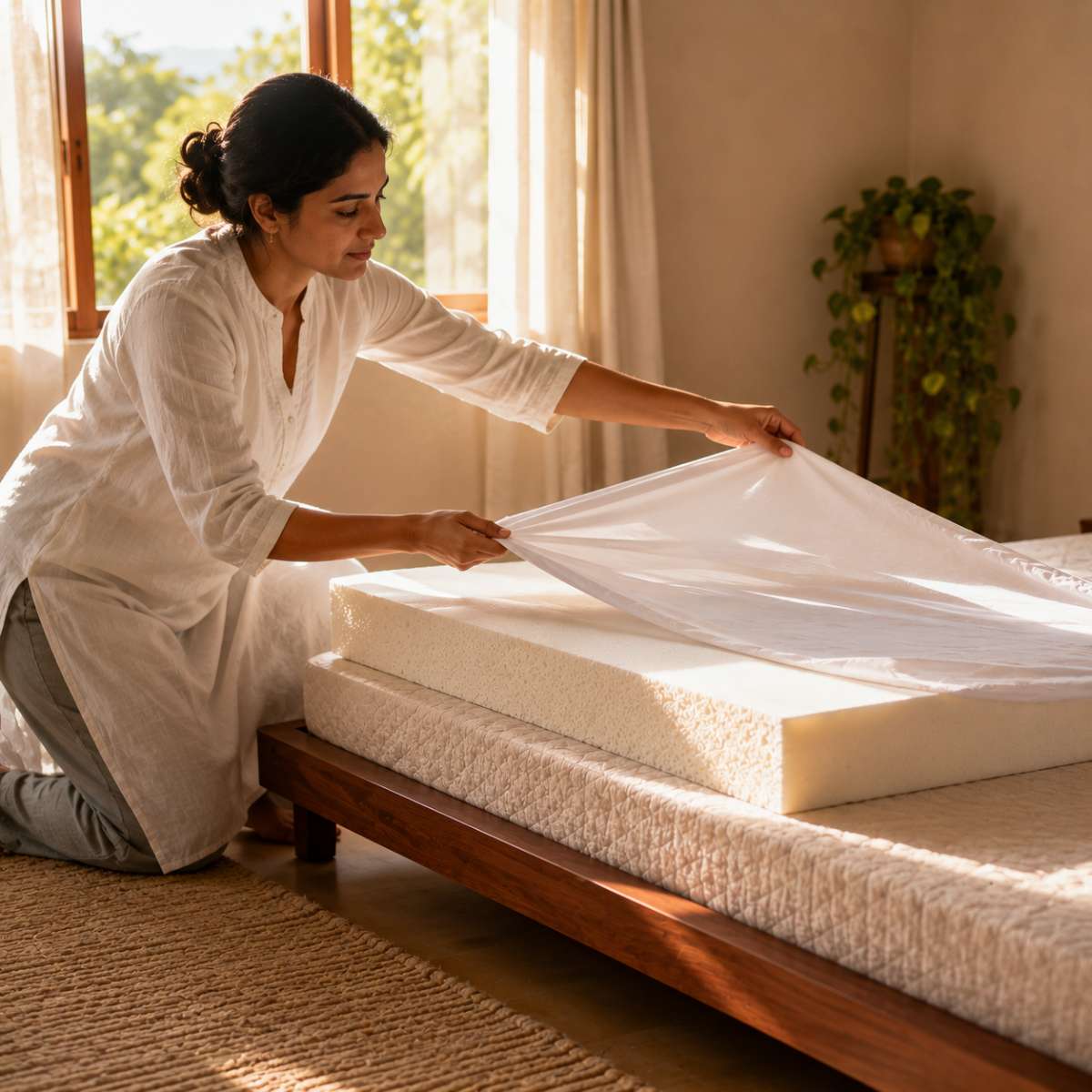

A mattress protector keeps your mattress safe from spills, sweat, and dust mites. A mattress topper changes how your mattress feels. They are not interchangeable – one is a shield, the other is a comfort upgrade. If you are trying to figure out which one to buy – or whether you need both – this guide breaks it down clearly.
What does a mattress protector actually do?
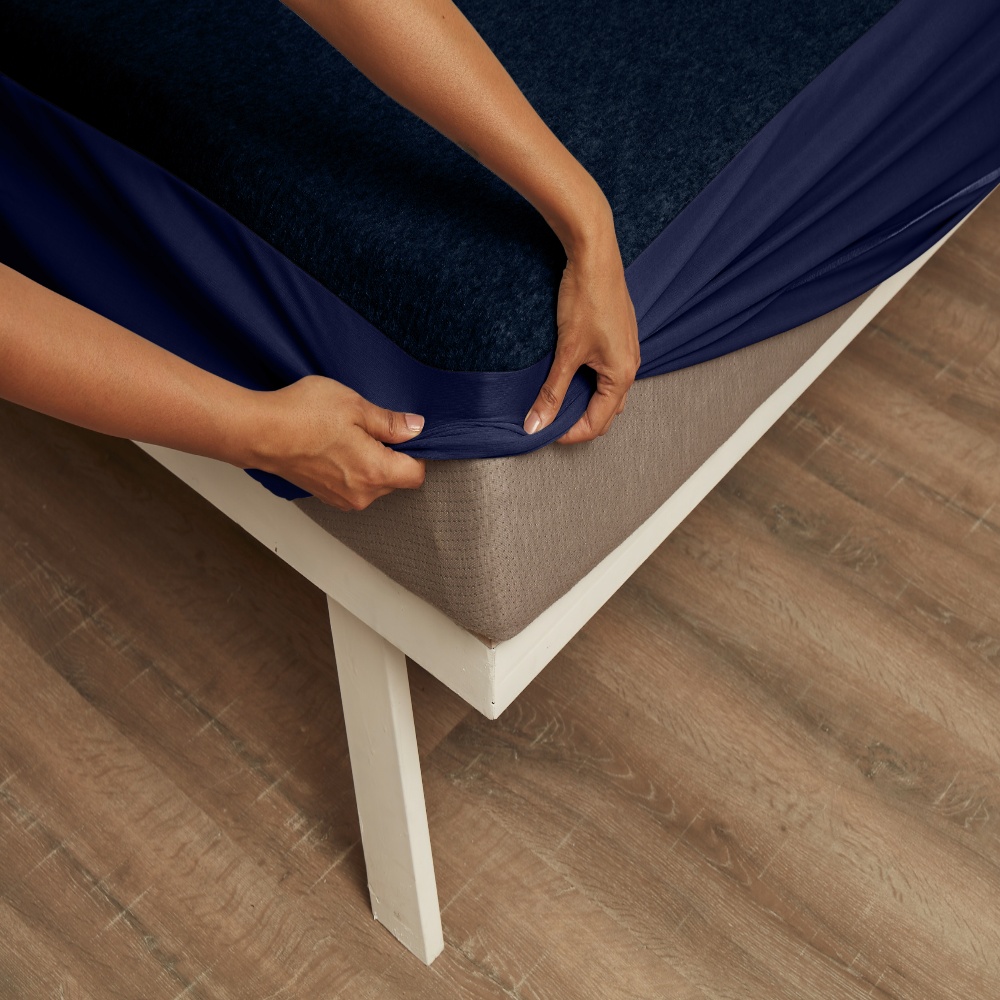
A mattress protector is a thin cover – usually waterproof – that wraps around your mattress like a fitted sheet. Its job is purely defensive. It blocks spills, body sweat, dust mites, and allergens from seeping into the foam or springs beneath it.
In India, the case for a protector is stronger than most people realize. Humidity – especially during monsoon months – creates ideal conditions for dust mite colonies inside unprotected mattresses. A quality mattress can last 8-10 years. Without a protector, foam absorbs moisture, sweat, and dead skin cells that are almost impossible to clean once they have settled in.
A good protector does not change how your mattress feels. A thin, well-made one is essentially invisible under your bedsheet. The only exception is cheap, plastic-feeling waterproof covers that crinkle when you move – those are worth avoiding.
Your mattress protector is also your warranty protection. Most mattress warranties are voided if the foam shows moisture or stain damage – and manufacturers do check.
What does a mattress topper do and when do you need one?
A mattress topper sits on top of your mattress – usually 2 to 4 inches thick – and directly changes how the surface feels when you lie down. If your mattress is too firm, a memory foam or latex topper softens it. If it is too soft and lacks support, a high-density foam topper can firm things up.
Toppers also extend the life of an aging mattress that has lost its original feel. They will not fix a broken spring or a sagging foam layer, but for a mattress that is just less comfortable than it used to be, a topper can buy you a few more years before a full replacement.
They cost significantly more than protectors and add real height to your bed – a 3-inch topper means your fitted sheets need to accommodate the extra depth.
Mattress Protector vs Mattress Topper: How are they different?
Both go on top of your mattress, which is where the confusion starts. But they solve completely different problems.
| Feature | Mattress Protector | Mattress Topper |
|---|---|---|
| Primary purpose | Protect from spills, sweat, dust mites | Improve comfort and feel |
| Thickness | 0.5-2 mm (barely noticeable) | 2-4 inches (adds real height) |
| Changes mattress feel? | No | Yes – softer or firmer |
| Waterproof | Usually yes | Usually no |
| Typical materials | Polyester, cotton, bamboo, terry | Memory foam, latex, microfibre |
| Price range (India) | Rs. 800 – Rs. 3,000 | Rs. 3,000 – Rs. 15,000 |
| When to buy | With every new mattress purchase | When comfort needs upgrading |
Using a topper thinking it will also protect your mattress is a mistake – foam toppers are not waterproof. Using a protector hoping it will fix an uncomfortable mattress will not work either. They do different jobs.
Which one should you buy when getting a new mattress?
Both eventually – but start with a protector.
The moment a new mattress arrives, cover it with a protector. This protects your warranty and keeps the foam in its original condition for longer. A new mattress is an investment; the protector is cheap insurance.
A topper is optional at this stage. If the mattress feels right after a few weeks, you do not need one. Memory foam especially needs 2-4 weeks to break in and conform to your body weight before you judge how it feels. Wait before deciding.
One legitimate strategy: if you are buying a mid-range mattress but want a more premium feel, pairing it with a good latex topper from day one can be cheaper than going straight to a higher-priced mattress. The Orthopaedic Memory Foam Mattress paired with a latex topper gives you the support of an ortho base with a softer, more responsive surface feel.
Can you use a mattress protector and a topper at the same time?
Yes – and for most Indian households, this is the right setup.
The layering order matters: mattress – topper – protector – bedsheet. The protector goes over the topper, not under it. This keeps your topper clean and dry, which is important because toppers are not machine washable and are difficult to clean once moisture gets in.
One practical check before buying: make sure your protector fits the combined depth of your mattress and topper together. A protector designed for a 6-inch mattress will not fit a 10-inch mattress with a 3-inch topper stacked on top. Look for deep-pocket or elasticated-all-around protectors if you are layering both.
How does India’s climate affect your choice?
More than most people account for. India’s humidity levels – even outside monsoon season in cities like Chennai, Mumbai, and Bengaluru – mean sweat absorption into an unprotected mattress is a year-round problem. Dust mite populations thrive in warm, moist environments, and they are a leading trigger for allergies and asthma.
A protector is non-negotiable in any humid Indian city. It is not a luxury item.
For toppers, the climate affects material choice. Memory foam retains heat – already a concern in Indian summers. If you are using a memory foam topper, look for open-cell or gel-infused variants that allow better airflow. Latex toppers are naturally more breathable and better suited to warmer climates.
Which Wakefit products work for each?
The Wakefit Mattress Protector is a waterproof, breathable cover with a soft terry top layer – so you do not feel the stiff, plastic-like surface that cheaper waterproof covers have. It is machine washable, which matters because protectors need a wash every 2-3 months to stay effective against dust mites and allergens. It comes sized for every standard Indian mattress dimension.
If comfort is the issue and you are considering a topper, it is worth first evaluating whether the right mattress base solves the problem. The Natural Latex Mattress offers a naturally responsive, medium-firm feel that many sleepers find eliminates the need for a topper entirely. Wakefit also offers a 100-night trial – so you can test the mattress properly before deciding whether a topper upgrade is needed. For more on choosing the right mattress, see the complete mattress buying guide.
Frequently Asked Questions
1. Can a mattress protector protect against bed bugs?
A waterproof, fully encasing protector can block bed bugs from entering or escaping the mattress. A standard fitted-sheet style protector only covers the top and sides. For full bed bug protection, you need an encasement that zips closed around all six sides.
2. Does a mattress topper make a firm mattress softer?
Yes. A memory foam or latex topper in the 2-3 inch range will noticeably soften the surface feel of a firm mattress. For significant softening, a 3-inch memory foam topper with a density of 40-50 kg per cubic metre is the standard recommendation.
3. Do I need a mattress protector if my mattress already has a fabric cover?
Yes. The fabric cover on a mattress is for surface durability and aesthetics – it is not waterproof and does not stop moisture or allergens from penetrating the foam layers below. A protector is still necessary.
4. How often should I wash my mattress protector?
Every 2-3 months under normal use. If someone in the household has allergies, asthma, or sweats heavily, monthly washing is better. Always follow the label – high-heat washing can degrade the waterproof membrane.
5. Will a mattress topper fix a sagging mattress?
No. A topper sits on the surface and follows the shape of any dip or sag underneath it. A mattress with visible sagging needs replacement, not a topper on top.
6. Are mattress toppers suitable for memory foam mattresses?
Yes, but carefully. Memory foam mattresses already contour to your body – adding a thick memory foam topper can make the surface feel excessively soft and reduce the support the mattress was designed to provide. A thin topper (1-2 inches) or a latex topper works better on a memory foam base.
7. What size mattress protector should I buy?
Always match the mattress size exactly – Single, Single XL, Double, Queen, or King. Also check the depth specification. A standard protector rated for 6-inch mattresses will not stretch properly over a 10-inch one. Look for deep-pocket or all-around elastic designs for thicker mattresses.
8. Is it worth buying a topper for a brand-new mattress?
Usually not right away. Memory foam mattresses need 2-4 weeks to soften and conform to your body weight before you can judge the comfort level. Buy a protector immediately. Wait on the topper until you have slept on the mattress for a few weeks.


No Comments