
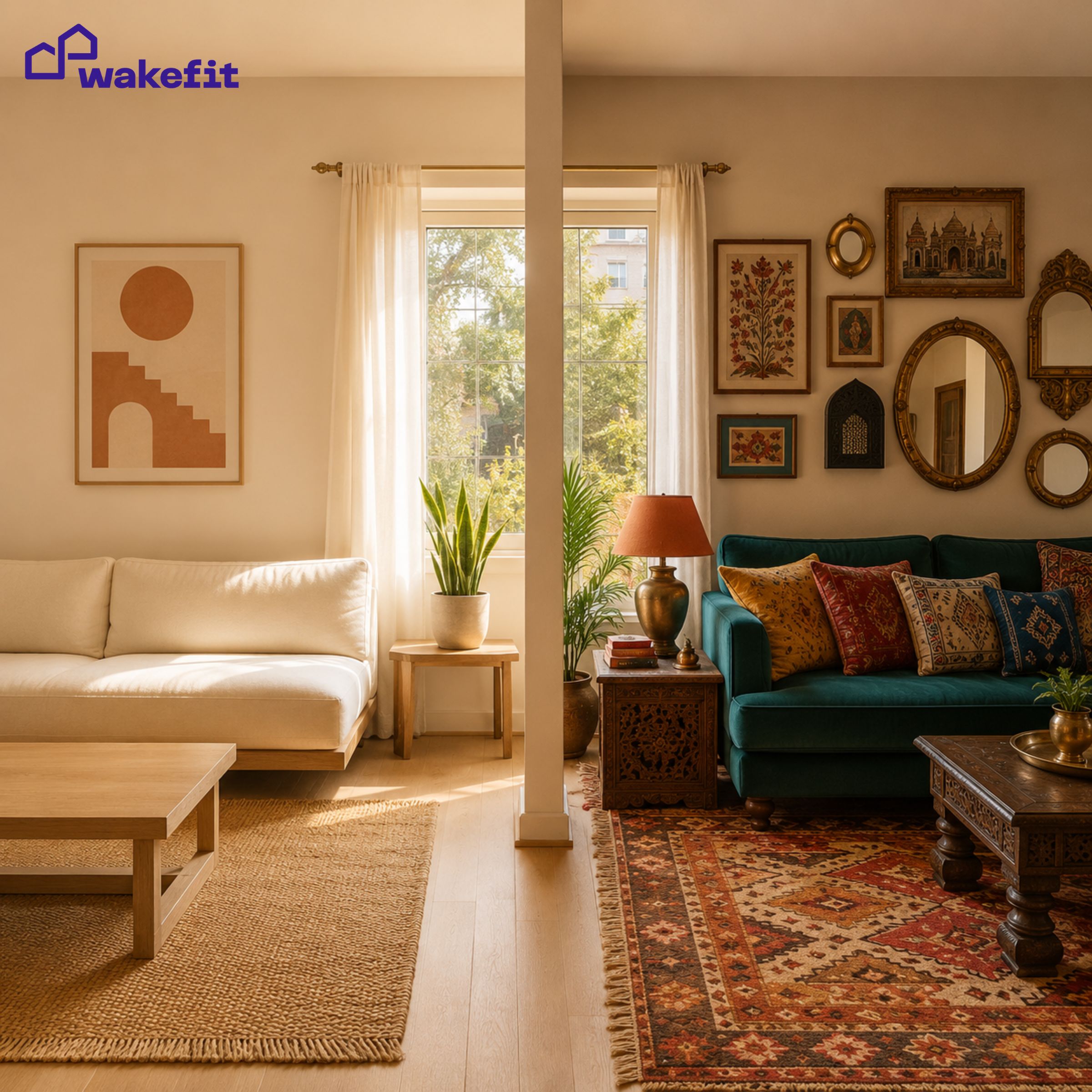

Minimalism looks effortless in design magazines. In an actual Indian apartment – where you are storing bedding for three seasons, festival décor for six occasions, and relatives visit without warning – it takes more thought. Minimalist home décor is not about owning less. It is about storing more cleverly and editing what stays visible. Maximalism, on the other hand, is not clutter – it is intentional abundance, and it suits certain rooms, certain households, and certain personalities far better than a stripped-back aesthetic ever will. This guide tells you which one fits your life and how to actually execute it.
What is the real difference between minimalist and maximalist home décor?
Minimalism is a design philosophy built on restraint. Every object in the room earns its place – either functional, meaningful, or both. Neutral colour palettes (whites, warm greys, natural wood tones), clean lines, and deliberate negative space define the look. The room feels calm because there is nothing competing for your attention.
Maximalism works on the opposite principle. More is intentional. Bold colours, layered textures, collected objects, gallery walls, patterned textiles – a maximalist room is rich with personality and visual story. Done well, it feels curated and alive. Done poorly, it feels chaotic. The line between the two is editing: a study on visual clutter and cognitive load found that cluttered environments compete for attention and increase cortisol levels, which is why an unedited maximalist space can feel stressful rather than expressive.
Neither style is inherently better. What matters is which one fits the people living in the space, the size of the rooms, and – in the Indian context specifically – how the home functions across different seasons and occasions.
Which décor style actually works better for Indian apartments?
Most Indian apartments are 500-900 sq ft. That physical constraint changes the equation significantly. In a 2BHK of 700 sq ft where three people live, full maximalism – multiple patterns, heavy furniture, dense collections – compresses the visual space and makes the apartment feel smaller than it is. Minimalism in smaller Indian homes is often a practical decision as much as an aesthetic one.
That said, India has a cultural maximalist tradition that runs deep. Carved wooden furniture, block-print textiles, brass objects, vibrant colour – these are not random accumulation, they are heritage. Stripping an Indian home to stark Scandinavian minimalism often feels wrong because it erases the cultural texture that makes the space feel like home.
The approach that works best in most Indian urban apartments is warm minimalism: a restrained base (neutral walls, clean furniture lines, uncluttered surfaces) with deliberate cultural accents. One carved wooden stool. A block-print cushion. A single piece of art with meaning. The key word is deliberate – each piece chosen, not accumulated.
Minimalist vs maximalist décor – how do they compare on every factor that matters?
| Factor | Minimalist Décor | Maximalist Décor |
|---|---|---|
| Best suited to | Compact apartments under 800 sq ft, urban renters | Larger homes, owned properties, heritage spaces |
| Maintenance effort | Low – fewer surfaces, clean lines easier to maintain | High – more objects, more surfaces, more upkeep |
| Cost to set up | Higher per piece (fewer, better quality items) | Can be lower – built up gradually over time |
| Flexibility to change | High – neutral base adapts to new accents easily | Lower – heavily layered rooms harder to update |
| Rental suitability | High – neutral, portable, no permanent changes | Lower – heavy, harder to transport and reinstall |
| Indian festival adaptation | Harder – requires planned storage for seasonal décor | Easier – adds naturally to existing visual layers |
| Psychological effect | Calmer, lower visual stress | More stimulating, warmer, personality-rich |
| Resale / rental appeal | Broader – neutral spaces photograph and show better | Niche appeal – depends on buyer or tenant taste |
How do you apply minimalist décor to your living room and bedroom specifically?
For living room décor ideas, start with the sofa – it is the largest piece and anchors the entire room. In minimalist living room design, choose a sofa in a neutral tone (off-white, warm grey, oat) with clean lines and no ornate detailing. A standard Indian living room of 12×14 ft has room for one three-seater sofa, a low coffee table, and one accent chair – nothing more. Keep the floor as clear as possible. One textured rug grounds the seating zone without adding visual noise.
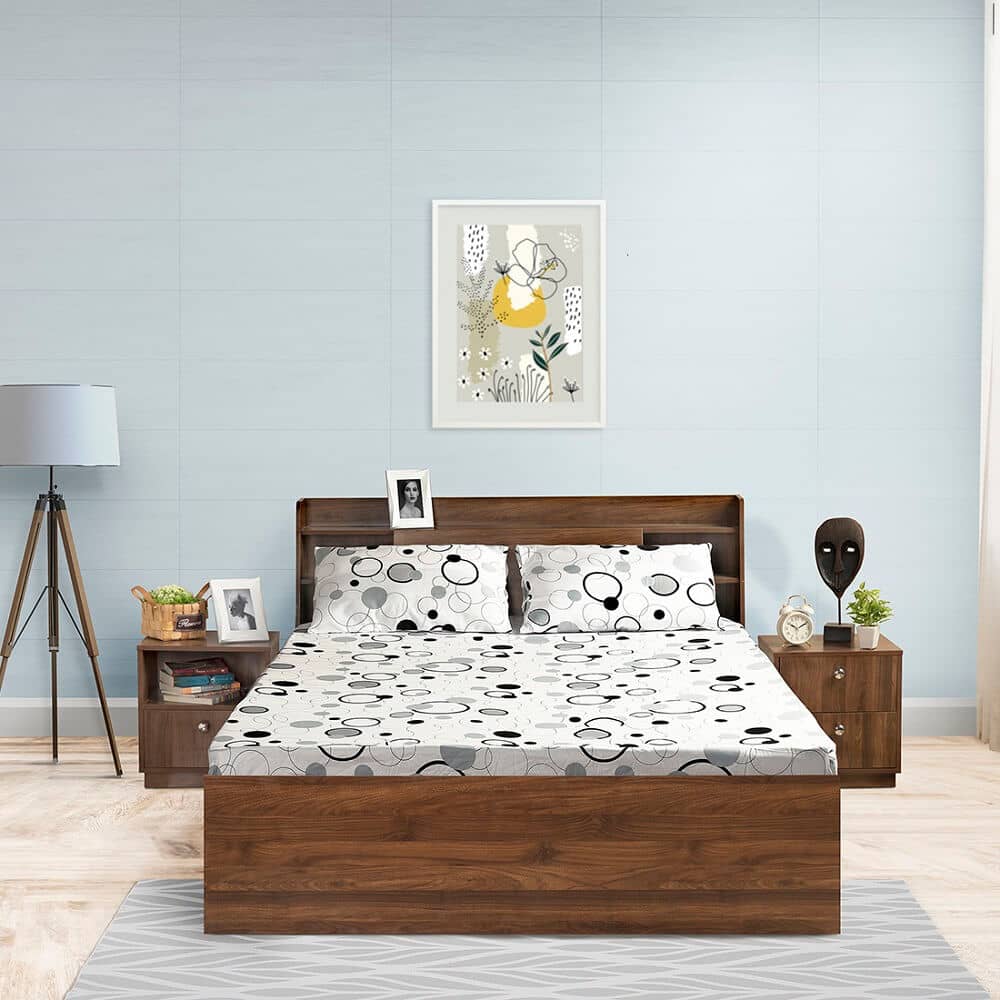
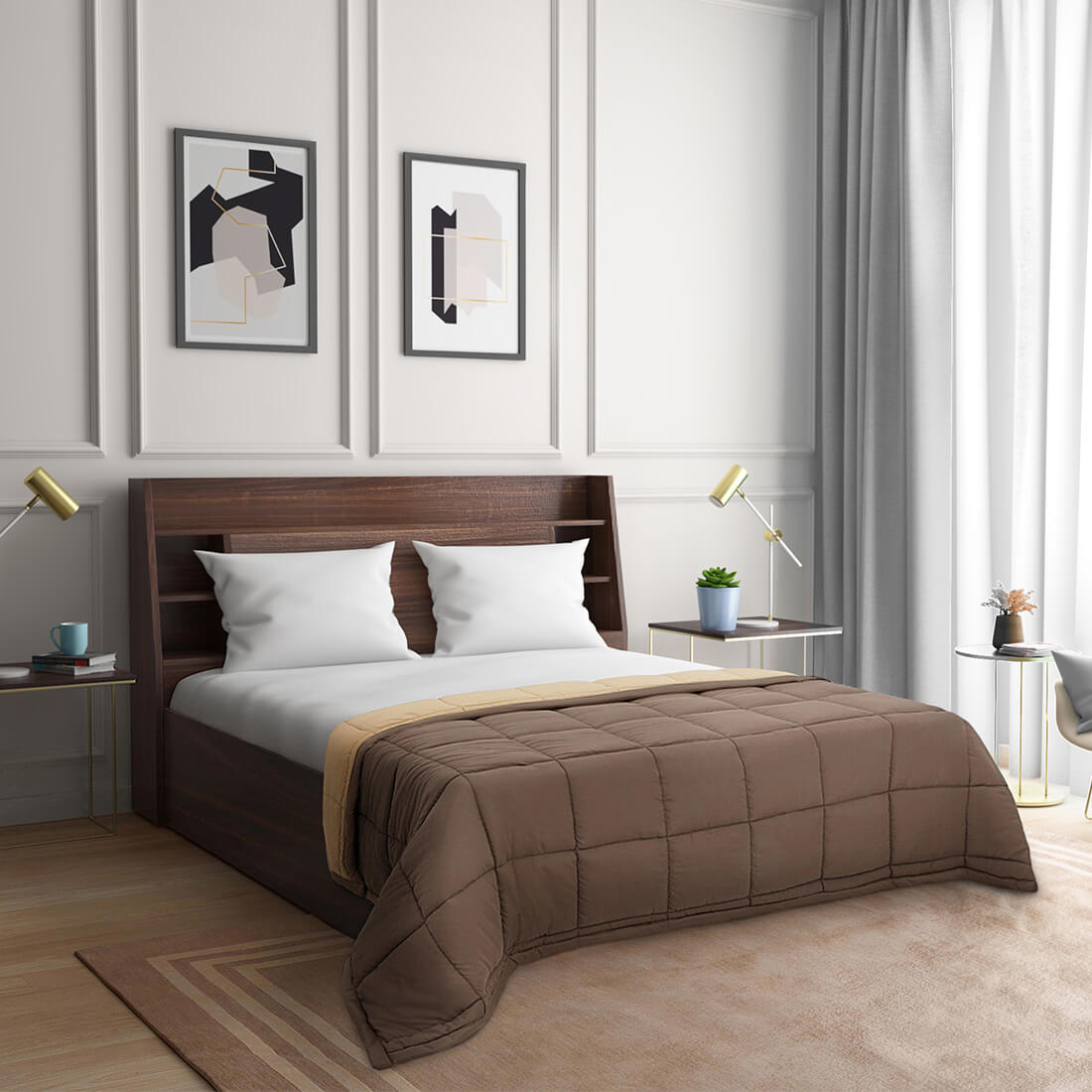
For bedroom décor ideas, the bed is the centrepiece and the biggest opportunity. A low-profile platform bed or an upholstered frame in a muted fabric keeps the visual weight down. The walls above the bed need one deliberate element – a single piece of art, a rattan panel, or a fabric hanging – not a gallery wall. Side tables should hold one object each. If your bedroom feels cluttered despite clean furniture, the floor is usually the problem: clothes on chairs, bags by the door, shoes visible. Minimalist bedrooms work only when storage is completely solved.
What about Indian festivals – can you stay minimalist through Diwali and Navratri?
This is the question no design guide addresses, and it is the most practically relevant one for Indian homes. A minimalist room styled in September looks nothing like it needs to look for Diwali in October. Rangoli, diyas, fabric hangings, fairy lights, flower arrangements – Indian festival décor is inherently maximalist and it does not sit quietly in a minimal space.
The answer is not to skip festival décor. The answer is a rotation system. A minimalist Indian home needs concealed storage for seasonal items – festival décor, winter bedding, occasional-use objects – that can be brought out fully for two or three weeks and returned cleanly. Under-bed storage, deep wardrobe shelves, and dedicated storage boxes make this possible. The base of the home stays minimal; the festivals are layered on fully and then stored again. This is not a compromise – it is a system.
Which Wakefit pieces make minimalist home décor actually work in Indian apartments?
The storage problem is what makes or breaks minimalist home décor in Indian apartments. Wakefit’s hydraulic storage beds solve the most common failure point – visible clutter on bedroom floors – by moving winter bedding, festival décor boxes, and seasonal clothing completely out of sight. The frame lifts on gas pistons with no visible hardware, so the bedroom reads clean regardless of what is stored underneath. Wakefit wardrobes are designed for Indian clothing volume – sarees, kurtas, and seasonal wear that most international minimal-design wardrobes fail to accommodate. Clean external doors keep the minimalist look intact while the interior handles the full Indian storage requirement. All pieces come with a manufacturer warranty, zero-cost delivery and assembly across 19,000+ pin codes, and no-cost EMI.
Frequently Asked Questions
1. Which home décor style is better for small Indian apartments?
Minimalism generally works better in apartments under 800 sq ft because it keeps sightlines open and makes rooms feel larger. Warm minimalism – a neutral base with deliberate cultural accents – suits Indian apartments better than strict Scandinavian minimalism, which can feel sparse and culturally disconnected.
2. Can I follow minimalist home décor in a rented apartment?
Yes – minimalism is ideal for rentals. Neutral tones work with any wall colour a landlord has chosen. Freestanding furniture requires no drilling. Clean, uncluttered spaces are easier to pack and move. The one investment worth making even in a rental is a good storage bed – it solves the floor clutter that defeats most rental minimalism attempts.
3. How do I store festival décor in a minimalist home?
Dedicated storage boxes under the bed or on the top shelves of a wardrobe, labelled by occasion. A hydraulic storage bed gives enough volume for two or three full seasons of festival items. The system works when you bring everything out fully for the occasion and return it completely afterwards – half-stored festival items are what break minimalism in practice.
4. What colours work best for minimalist home décor in Indian apartments?
Warm whites, soft off-whites, warm grey, and natural wood tones. Pure cold white reads clinical in Indian light. Adding one warm accent – a terracotta cushion, a warm wood side table, a jute rug – keeps the minimalist palette from feeling stark. Avoid more than two accent colours in the same room.
5. My parents prefer maximalist décor but I want minimalism – how do I compromise?
Assign spaces. Common areas can lean warmer and more layered to accommodate cultural objects and heritage furniture. Your bedroom can be fully minimalist. The puja room is almost always maximalist in Indian homes – that does not need to change. A minimalist base in the living room with a few maximalist focal pieces (one large painting, one carved wooden piece, one textile) is the practical middle ground most Indian families land on.
6. What is the single most important change to make a bedroom feel more minimalist?
Solve the floor. Clothes on chairs, bags by the door, shoes visible – these make bedrooms read as cluttered regardless of how good the furniture is. Add one dedicated storage solution and the bedroom feels minimalist almost immediately. Furniture and décor changes are secondary to fixing storage.
7. Does maximalist décor make a small room feel smaller?
Usually yes. Dense visual layers – multiple patterns, heavy furniture, gallery walls – compress the perceived space in rooms under 150 sq ft. Maximalism works in larger rooms where there is enough space for the eye to rest between visual elements. In compact Indian apartments, maximalism works best applied to one deliberate zone rather than the whole room.
8. How do I start transitioning to minimalist home décor without replacing everything?
Start by removing, not buying. Go through one room and take out anything that serves no function and holds no meaning. Store it for two weeks – if you do not miss it, donate or discard it. Then fix storage: if objects are on surfaces because there is nowhere else for them, buying new minimal décor will not help. Most Indian homes find that removing works better than replacing.
No Comments