
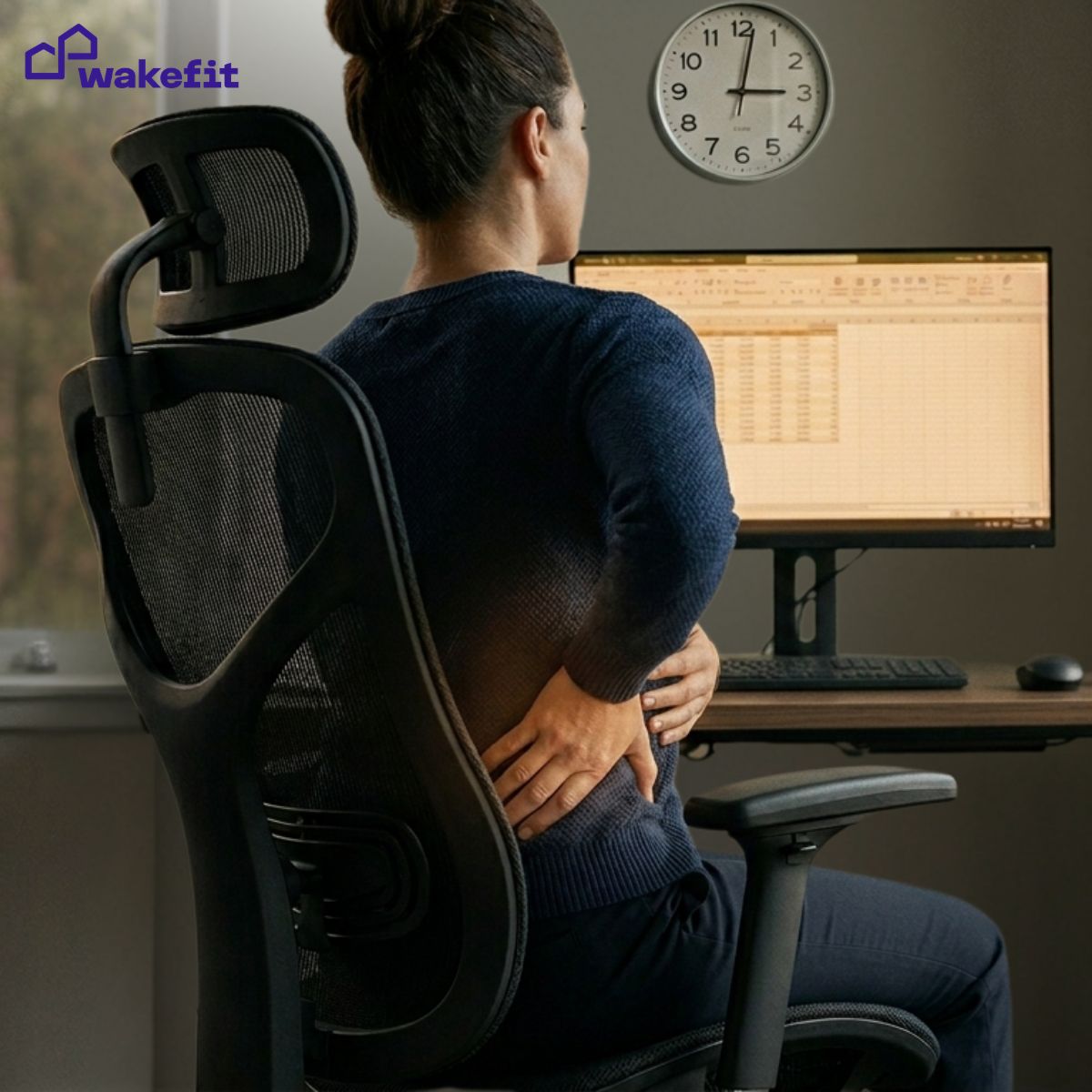

Most people spend more time choosing a phone case than the chair they sit on for 9 hours a day. That might explain why back pain is now the leading cause of disability worldwide – not cancer, not diabetes, not heart disease. Back pain. This guide is for people who’ve been treating the symptom for too long. It’s time to address the cause.
Back Pain From Sitting Is Not Normal – It’s a Sign
Here is the part nobody says clearly enough: Back pain from long hours of sitting is not inevitable. It is a signal.
It is your body telling you that something in your environment is working against your spine – consistently, silently, every single day. And in most cases, that something is the chair you sit on without thinking twice.
The reason most people never connect the two? The pain builds slowly. One stiff morning, then a few more, then a dull ache that becomes your default afternoon experience. By the time it feels serious, it has been months in the making and the chair has never once crossed your mind as the cause.
The Numbers That Should Make You Look at Your Chair Differently
- The average desk worker sits for 9.5 hours a day – more than they sleep
- Sitting increases pressure on your lumbar discs by up to 40% more than standing
- 8 out of 10 people will experience significant back pain at some point in their lives
- Back pain is the number one cause of workplace absenteeism in India
- Most people replace their mattress, their pillow, their footwear – and spend years never questioning the chair they sit on for a third of their waking life
Which Type of Back Pain Do You Have?
Back pain is not one thing. Where yours shows up tells you exactly what your chair is failing to do.
- Lower back pain – dull ache or stiffness at the base of the spine, usually worse after long hours and better after rest. This is almost always a lumbar support failure. Your chair is not holding the natural inward curve of your lower back.
- Mid-back and shoulder blade pain – felt between the shoulders or across the upper spine. Usually means your chair ends too low – leaving the thoracic spine unsupported for hours while you hunch forward into a screen.
- Neck tension and headaches – often written off as stress. Frequently caused by armrests that are the wrong height, forcing your shoulders to carry the weight of your arms across an entire workday.
If you recognise any of these, your chair is contributing. The question is how much and how long you are willing to let it.
Why the Wrong Chair Makes Back Pain Worse
Your spine has a natural S-curve. A chair that does not support this curve does not just fail to help – it actively works against you.
Without adequate chair back support, your lower back loses its inward arch within the first hour of sitting. Your pelvis tilts backward. The discs between your vertebrae bear uneven load. Your muscles compensate and eventually fatigue. What begins as mild discomfort at 11 AM becomes the only thing you can think about by 3 PM.
The damage is slow enough that most people blame age, stress, or their old mattress, not a chair they have been sitting in for three years without a second thought.
Mistakes That Make Back Pain Worse (Most People Make at Least Two)
- Trying to fix posture instead of the chair.
Posture reminders, corrector belts, ergonomic apps – none of them solve a structural problem. You cannot maintain good posture in a chair that does not structurally support it.
- Buying a chair based on how it looks.
Aesthetics and ergonomics have almost nothing to do with each other. A chair that photographs well in a home office setup can have zero lumbar adjustability, a rigid back, and a seat that cuts off circulation after 40 minutes.
- Reaching for a lumbar cushion.
A cushion on a bad chair is a band-aid. It might take the edge off for a week. It does not correct the problem – and most cushions flatten within the first month of real use.
- Ignoring seat height.
If your feet are not flat on the floor and your knees are not close to 90 degrees, your hips are misaligned – which directly loads your lower spine. A chair you cannot adjust to your height is a chair that was not built for you.
What to Look for in a Chair That Actually Helps
The difference between a chair that relieves back pain and one that causes it comes down to a few specific things:
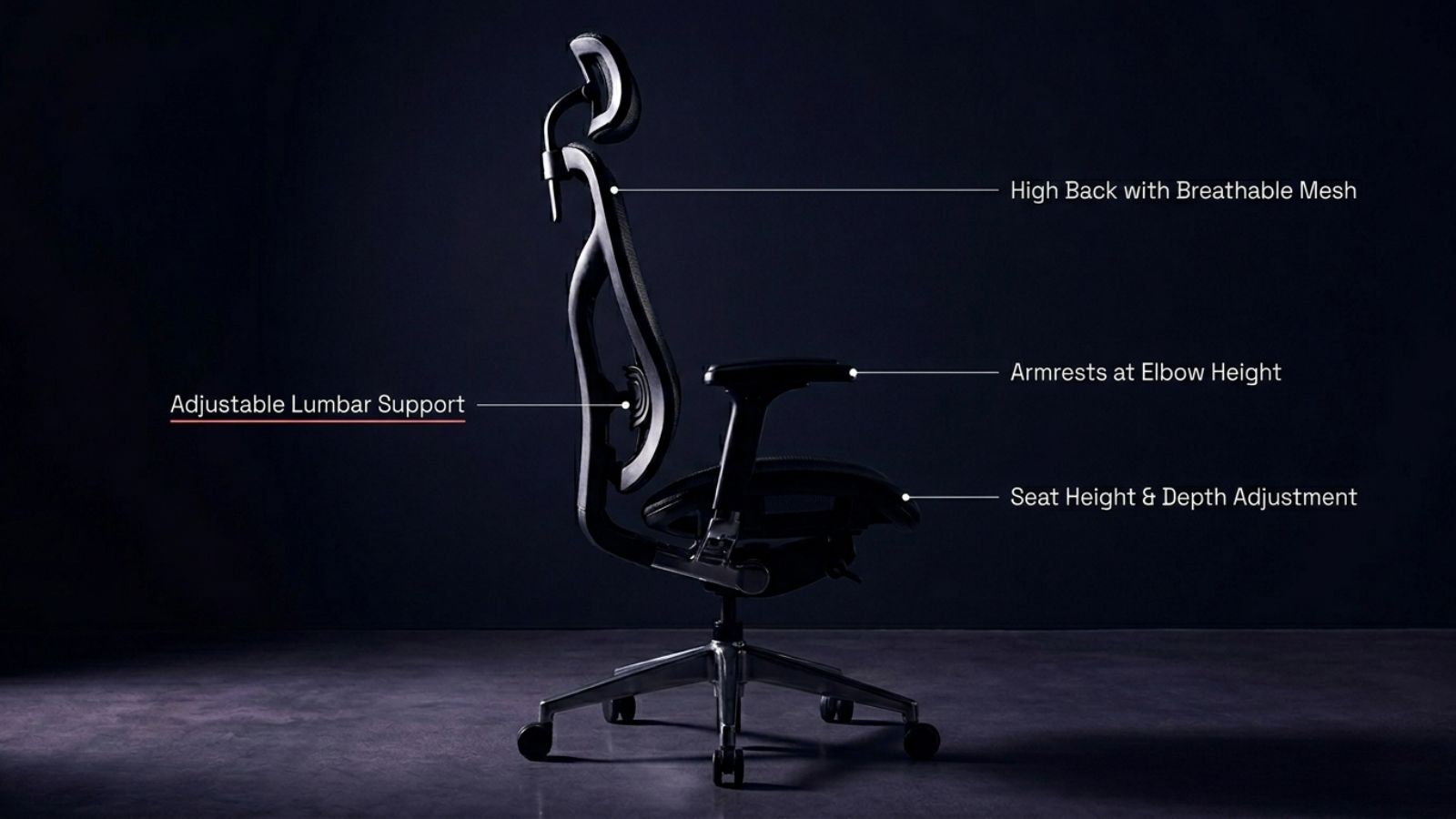
- Adjustable lumbar support – the single most important feature. Not a decorative curve in the backrest. An actual mechanism you can move to meet your specific spine. This is what an ergonomic chair does that a standard chair does not, the support comes to you.
- High back with breathable mesh – full spine coverage in a material that allows airflow. If you are uncomfortable from the heat, you shift. If you shift, your posture breaks. Mesh keeps you stable and supported through the full session.
- Seat height and depth adjustment – your hips need to be fully supported, your feet flat, your knees level. If neither adjusts, the chair was built for an average body that may not be yours.
- Armrests at elbow height – they take the load off your shoulders completely. Ignore this and your neck pays for it by the end of day.
A well-built ergonomic office chair with these four features will do more for persistent back pain than months of posture reminders. Chairs like the Gravita and Safari Pro are built around exactly these principles – not just comfortable to sit in, but structurally designed to correct the conditions that cause back pain in the first place.
See the full range of ergonomic office chairs
FAQs
- Can the right chair actually fix back pain?
For pain that comes from long hours of poor seating – yes, significantly. A chair with proper lumbar support and back support can reduce pain noticeably within two to three weeks of consistent use. Pain that has a medical cause needs medical attention; pain that builds through a workday and eases on rest days is almost always seating-related.
- What is the best chair for back pain if I sit more than 8 hours a day?
Look for an ergonomic chair with a high back, adjustable lumbar support, breathable mesh, and a synchro tilt mechanism. These features together address extended sitting specifically – not just the first hour, making it the best chair for back pain.
- Is a chair for back pain different from a regular office chair?
Yes. A regular office chair is designed around cost and aesthetics. A chair built for back pain is designed around the spine – with adjustability, structural support, and materials that work across a full workday, not just the first twenty minutes.
- What is chair back support and why does it matter?
Chair back support refers to how well a chair maintains your spine’s natural curve while you sit. Without it, your back muscles compensate all day and fatigue. With proper back support, the chair carries the structural load so your muscles do not have to.
- Can a chair cause back pain even if it feels comfortable?
Yes – and this is the most common misconception. A chair can feel comfortable for the first hour and still cause significant back pain over 8 hours. Short-term comfort and long-term structural support are completely different things.
- How much should I spend on a chair for back pain?
You do not need to spend a fortune. A well-built ergonomic office chair with the right features starts under ₹6,000 in India and most come with a 3-year warranty. Compare that to what months of physiotherapy costs, and the chair pays for itself quickly.


No Comments